Mapping Audience Shifts Toward Subscription Platforms for Contemporary Global Cinema Releases
Rafael Hayes · Jul 2, 2026
Mapping Audience Shifts Toward Subscription Platforms for Contemporary Global Cinema Releases
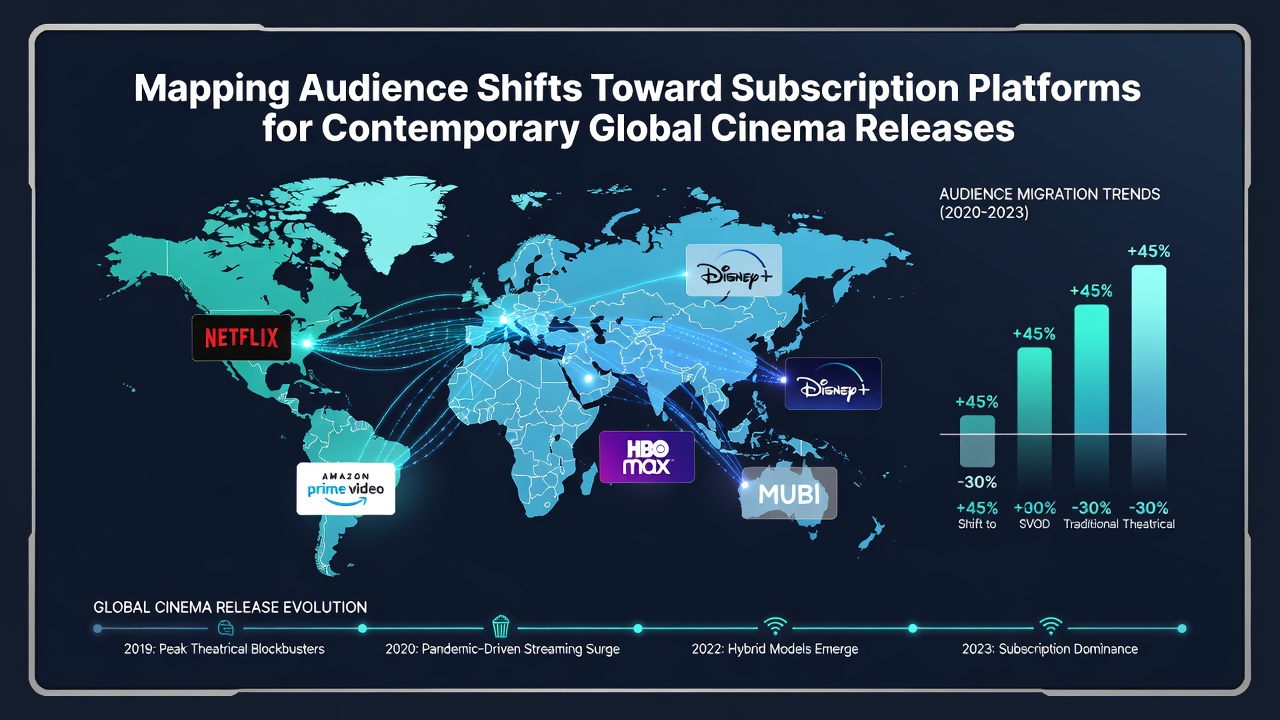
Data from multiple industry trackers shows steady movement of viewers toward subscription video on demand services for international film releases, with numbers climbing through mid-2026. In July 2026 platform reports indicated that theatrical windows for many titles had shortened in several markets, pushing audiences to access global cinema through monthly fee models rather than one-time purchases or physical media. ## Global Subscription Growth Patterns
Subscription platforms recorded increased sign-ups across North America, Europe, and parts of Asia during the first half of 2026, according to figures compiled by the European Audiovisual Observatory. Those numbers reflected a broader pattern where viewers sought bundled access to releases from Hollywood studios alongside content from regional producers in India, South Korea, and Latin America. Observers tracking these trends note that hybrid genre films, including action-comedies and cross-cultural dramas, performed strongly on services offering simultaneous or near-simultaneous availability after limited theatrical runs. Research indicates this availability reduced the lag time between festival premieres and home viewing for audiences outside major production hubs. ## Regional Variations in Platform Adoption
In Europe, regulatory frameworks supporting digital single market initiatives encouraged wider availability of dubbed and subtitled versions on subscription services, with data showing higher completion rates for non-English language releases. Australian Communications and Media Authority reports highlighted similar upticks in local households shifting from free-to-air broadcasts to curated libraries that included contemporary global titles. Asian markets displayed distinct trajectories. South Korea and Japan saw rapid uptake on domestic platforms that licensed international cinema alongside local productions, while Southeast Asian countries experienced growth through partnerships between global services and regional telecom providers. These arrangements delivered high-definition streams of recent releases to mobile-first audiences.  ## Platform Algorithms and Discovery Mechanisms
Recommendation systems on major services play a documented role in surfacing international releases to users who previously consumed mainly domestic content. Studies from academic institutions tracking viewing logs reveal that algorithmic suggestions increased exposure to films originating outside a subscriber's home region by measurable margins in 2025 and early 2026. Take one analysis of user sessions on services operating in multiple territories, where cross-border recommendations accounted for a rising share of start-up views for non-English titles. Those who've examined the data find that personalization features help surface lesser-known genre blends that might otherwise remain undiscovered through traditional marketing channels. ## Content Licensing and Release Strategies
Major studios adjusted licensing agreements throughout 2025 and 2026, granting subscription platforms earlier windows for certain titles while maintaining exclusive theatrical periods in key territories. This approach aligned with observed audience preferences for flexible viewing schedules that accommodate time zone differences and device portability. Industry reports document cases where simultaneous multi-territory releases on subscription services generated higher aggregate viewership than staggered rollouts. Data compiled across platforms shows these coordinated launches particularly benefited films relying on global word-of-mouth rather than single-market campaigns. ## Technological and Accessibility Factors
Improvements in adaptive streaming technology reduced buffering incidents for high-resolution global cinema releases, even on variable network connections common in emerging markets. Accessibility features such as customizable subtitles and audio descriptions expanded on several services, aligning with requirements outlined in various national media regulations. Research indicates these enhancements contributed to longer session times among viewers sampling international productions for the first time. Figures from platform transparency reports reveal sustained engagement with catalog titles months after initial release dates. ## Conclusion
Subscription platforms continue to reshape how contemporary global cinema reaches audiences, supported by evolving licensing models, algorithmic discovery tools, and infrastructure upgrades. Data collected through July 2026 demonstrates consistent migration patterns across regions, driven by convenience, content variety, and technical accessibility rather than isolated market events. Continued monitoring of these shifts provides measurable indicators of changing consumption habits in the international film sector.
## Platform Algorithms and Discovery Mechanisms
Recommendation systems on major services play a documented role in surfacing international releases to users who previously consumed mainly domestic content. Studies from academic institutions tracking viewing logs reveal that algorithmic suggestions increased exposure to films originating outside a subscriber's home region by measurable margins in 2025 and early 2026. Take one analysis of user sessions on services operating in multiple territories, where cross-border recommendations accounted for a rising share of start-up views for non-English titles. Those who've examined the data find that personalization features help surface lesser-known genre blends that might otherwise remain undiscovered through traditional marketing channels. ## Content Licensing and Release Strategies
Major studios adjusted licensing agreements throughout 2025 and 2026, granting subscription platforms earlier windows for certain titles while maintaining exclusive theatrical periods in key territories. This approach aligned with observed audience preferences for flexible viewing schedules that accommodate time zone differences and device portability. Industry reports document cases where simultaneous multi-territory releases on subscription services generated higher aggregate viewership than staggered rollouts. Data compiled across platforms shows these coordinated launches particularly benefited films relying on global word-of-mouth rather than single-market campaigns. ## Technological and Accessibility Factors
Improvements in adaptive streaming technology reduced buffering incidents for high-resolution global cinema releases, even on variable network connections common in emerging markets. Accessibility features such as customizable subtitles and audio descriptions expanded on several services, aligning with requirements outlined in various national media regulations. Research indicates these enhancements contributed to longer session times among viewers sampling international productions for the first time. Figures from platform transparency reports reveal sustained engagement with catalog titles months after initial release dates. ## Conclusion
Subscription platforms continue to reshape how contemporary global cinema reaches audiences, supported by evolving licensing models, algorithmic discovery tools, and infrastructure upgrades. Data collected through July 2026 demonstrates consistent migration patterns across regions, driven by convenience, content variety, and technical accessibility rather than isolated market events. Continued monitoring of these shifts provides measurable indicators of changing consumption habits in the international film sector.