Uncovering Patterns in Cross-Border Film Availability Through Examination of Platform Licensing Agreements for Blockbuster Titles
Amir Peters · Jun 23, 2026

Uncovering Patterns in Cross-Border Film Availability Through Examination of Platform Licensing Agreements for Blockbuster Titles
Platform licensing agreements determine where blockbuster titles appear on streaming services around the world and these contracts create distinct patterns in cross-border film availability that researchers track through public filings and industry disclosures. Major studios negotiate territorial rights with services like Netflix, Disney+, and Amazon Prime Video and the resulting deals often limit simultaneous releases while staggering windows based on market size and revenue projections.
Core Elements of Licensing Structures
Blockbuster titles typically enter licensing talks after their theatrical runs conclude and studios divide rights into exclusive windows that span multiple regions at once. Observers note that agreements specify duration, language options, and subtitle requirements which directly influence when viewers in different countries gain access to the same film. Data from trade reports shows that North American deals frequently precede European ones by several months while Asian markets receive later windows tied to local theatrical performance.
Regional Variations in Availability
Cross-border patterns emerge when one platform secures rights for multiple territories yet neighboring countries fall under separate contracts held by competitors. In June 2026 analysts at the European Audiovisual Observatory documented how several Hollywood action franchises appeared first on a single service across the EU while the same titles reached Latin American audiences through different providers under staggered timelines. These differences stem from currency fluctuations and local content quotas that shape negotiation outcomes.
Take one major franchise whose latest installment secured a two-year global license with one service in 2025 and researchers found that availability expanded to secondary platforms in select markets only after the initial term ended. Such sequencing creates predictable gaps that viewers encounter when traveling or using VPN services though the underlying agreements remain strictly legal.
Data Trends and Industry Reports
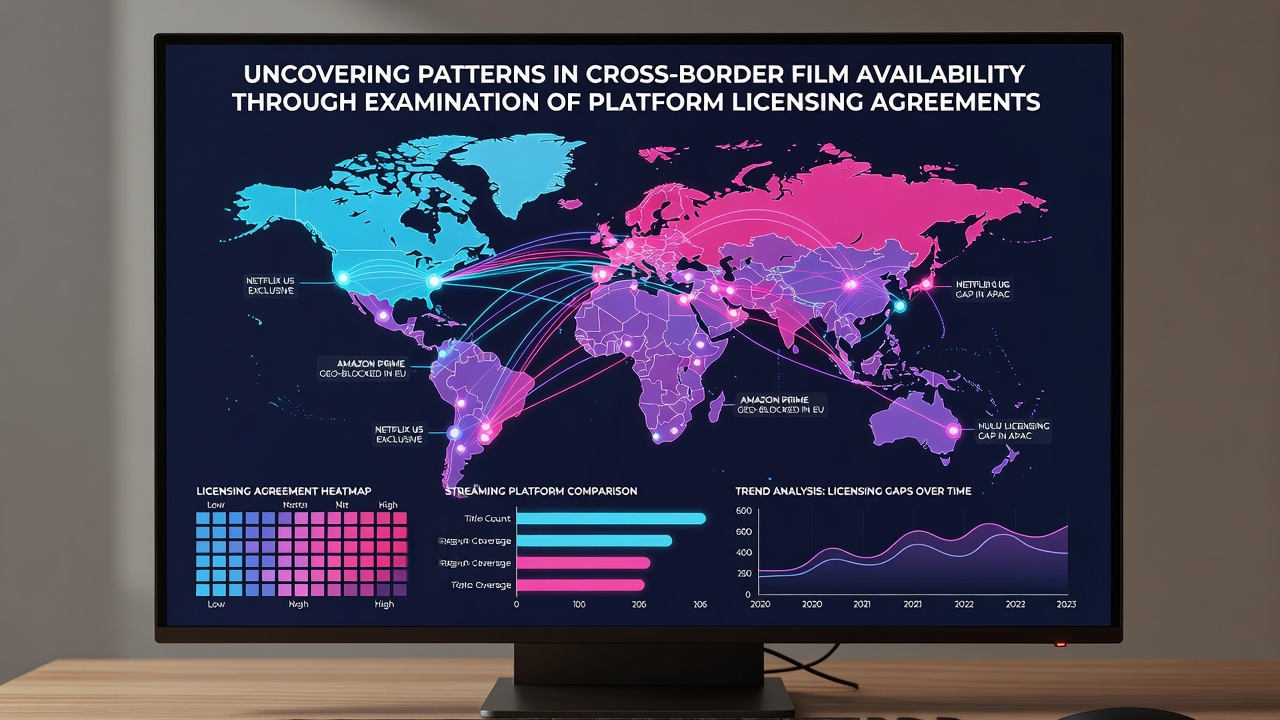
Figures released by the Motion Picture Association in early 2026 revealed that over 60 percent of top-grossing titles from the prior year carried region-specific streaming restrictions lasting between twelve and twenty-four months. Those restrictions correlate with higher per-subscriber fees in premium markets and lower fees where competition remains fragmented. Academic studies from the University of Melbourne's Centre for Media and Communication Research examined similar datasets and confirmed that licensing density rises sharply in English-speaking territories while non-English markets experience longer delays.
What's interesting is how these agreements interact with co-production treaties that allow certain films to qualify for local incentives and thereby alter licensing geography. A European co-production might secure earlier availability across EU member states because of shared cultural funding rules whereas a purely American title faces separate negotiations in each country.
Impact on Viewer Access Patterns
Viewers encounter these patterns through search results that show titles as unavailable in one location yet accessible elsewhere and the effect compounds when services rotate catalogs quarterly. Government agencies in Canada and Australia have tracked complaint volumes related to missing blockbusters and the numbers align with licensing expiration dates rather than technical issues. Industry organizations such as the Asia-Pacific Broadcasting Union compile annual summaries that map these shifts across dozens of territories and the reports highlight consistent delays in emerging markets compared with established ones.
Blockbuster availability therefore follows a geography of contracts rather than uniform global rollout and platforms adjust promotional spending accordingly. One study from a Canadian research institute found that marketing budgets for cross-border titles concentrate in regions where licensing windows open earliest which reinforces the visibility gap between territories.
Future Outlook and Contract Evolution
Contract language continues to evolve with clauses addressing simultaneous global premieres on streaming alongside theatrical windows and several major deals signed in late 2025 included provisions for shorter exclusivity periods in secondary markets. These adjustments respond to competitive pressure from new entrants while preserving revenue splits that favor originating studios. Observers tracking the sector expect further standardization in subtitle and dubbing requirements as services expand multilingual offerings to reduce per-territory customization costs.
Conclusion
Licensing agreements for blockbuster titles generate measurable patterns in cross-border availability that reflect market priorities, regulatory environments, and revenue models rather than random distribution. Data from multiple regions confirms that staggered windows remain the dominant approach while occasional simultaneous releases occur only under specific co-production or incentive conditions. Continued examination of public filings and industry disclosures will clarify how these structures adapt as platforms refine their global strategies.